

By MIKE HERNDON
There’s been a lot of talk lately in the sports world about fairness.
Is it fair that running backs earn less than other skill positions in the NFL, and that it’s becoming increasingly rare for them to sign deals that reflect their level of production after their rookie contracts expire?
Is it fair that NCAA student-athletes who study and play in the Big Ten will now have to travel literally across the country to play sporting events, some of which are scheduled on weekdays?
Is it fair that the NCAA, whose job it is to regulate college athletics, and its member conferences are seeking out congressional action to set “guardrails on name, image and likeness rights, while university athletic departments continue to rake in money from lucrative television deals, and top football and basketball coaches continue to rake in seven-figure salaries with massive buy-outs?
In short, no. But sports, as we are being constantly reminded, is a business. And as anyone who’s been through a layoff can tell you (whether they survived it or not), business isn’t fair.
It isn’t fair that running backs are treated like second-class citizens in the NFL when it comes time for their second contracts. With the beating they take on a regular basis, particularly those who could still be considered workhorses like Derrick Henry and Josh Jacobs, running backs deserve to be compensated.
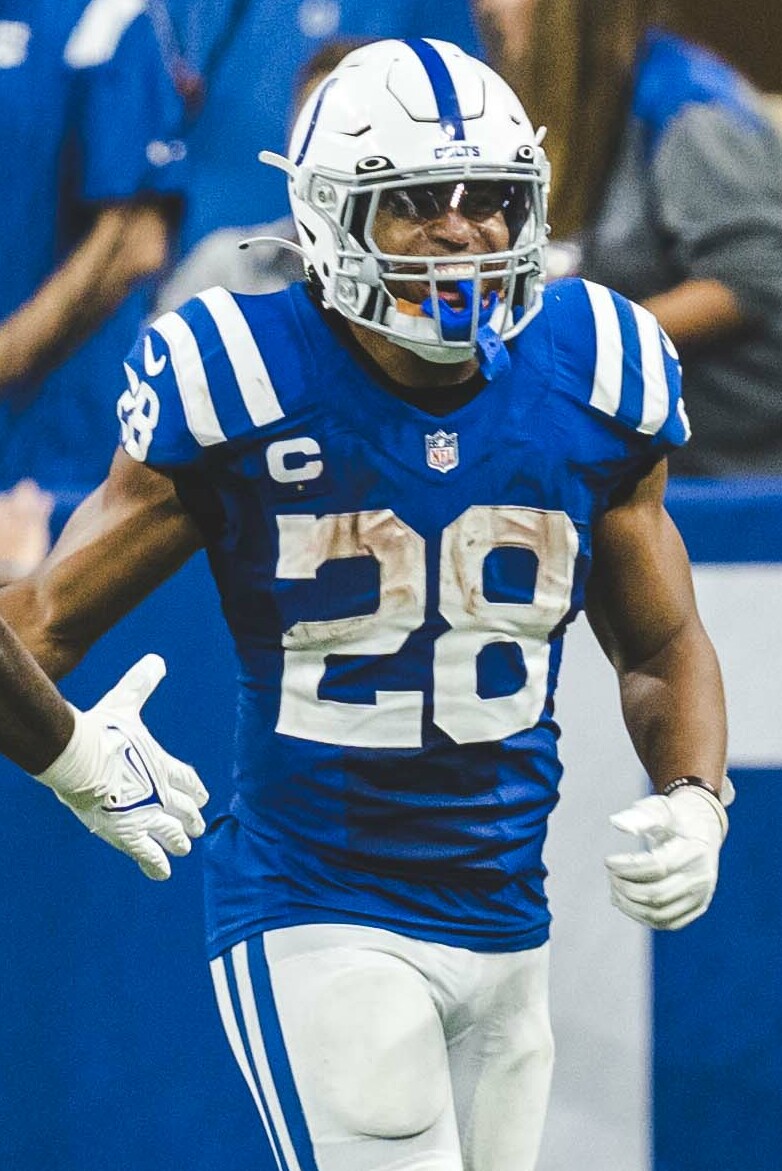
But there’s a short shelf life at the position. It’s precisely because of the beating that they take that it’s not a sound business decision to tie up a bunch of money in them. When teams have given massive second contracts to running backs, it has often backfired. Todd Gurley. David Johnson. Ezekiel Elliott. And so on.
It’s not fair. The compensation doesn’t match the production. But neither is it fair that teachers, police officers, firefighters and others whose work is essential to society are paid so little while entertainers, professional athletes and hedge-fund managers are paid so much.
It’s not about what’s fair. It’s about what the market dictates. And if running backs like Jacobs and Jonathan Taylor hold out, their teams will find less expensive replacements and play on while Jacobs and Taylor waste a year of their prime. Ask Le’Veon Bell how that works out.
It also isn’t fair that student-athletes at Rutgers and Maryland are going to have to travel to southern California, Oregon and Washington for athletic contests, as the Big Ten welcomes four west coast members into the conference.
Missouri football coach Eli Drinkwitz, whose conference already stretches halfway across the country and is adding two new members on its western edge, nevertheless summed up the problem nicely:
“Did we count the cost for the student athletes involved in this decision?” he asked, as shared by KRCG 13’s Bryan Hudnell and other sources. “We’re talking about a football decision. But what about softball and baseball, who have to travel cross-country? Do we ask about the cost to them? Do we know what the number one symptom or cause of mental health (issues) is? It’s lack of rest and sleep. Traveling in those baseball, softball games, they travel commercial, they get done playing at four, they’ve got to go to the airport, they come back, it’s three or four in the morning. They’ve got to go to class. I mean, did we ask any of them?”
No, they did not. We might be tempted to shrug off Drinkwitz’s concern as performative, as he is a football coach and the school that employs him left its conference 11 years ago and joined the SEC so its student-athletes could travel to Florida and South Carolina on a regular basis. But Drinkwitz wasn’t there then. He wasn’t part of that decision. And just because you know who signs your paycheck doesn’t mean you can’t recognize the imbalance in what they’re doing.
In a social media thread, University of Michigan regent Jordan Acker leveled both barrels at the NCAA:
“If this alleged oversight body, which claims it is high and mighty every time it runs to Congress demanding action, really cared about student athletes, they’d get this nonsense under control,” Acker wrote. “Instead, the run around finding minor violations while ignoring the VERY real impact that a weeknight competition in Seattle would have on student athletes with classes in College Park.”
The NCAA’s level of concern for student athletes has always been secondary to the bottom line. This is a business it’s managing, not a rec league. There are billion-dollar television contracts to consider and none of the NCAA’s constituents want to miss out on the gravy train.
Who are their constituents? The schools, of course. The NCAA is just a regulatory body set up by and operating at the behest of the universities themselves. So when we talk about the NCAA bogeyman, we’re really pointing our finger back at the schools, including the one that Acker represents. It’s not just the NCAA that doesn’t place its student-athletes’ welfare above the almighty dollar, it’s the very schools they attend.
Because, once again, this is a business, and the goal of businesses is to make money. That sucks for the volleyball players and softball players and swimmers and competitors in other non-football and basketball sports who are going to be flying red-eyes cross-country as a result. But in case you’re missing the point of this column, they are not the primary concern of the NCAA and its member presidents.
That isn’t how it should be, but that’s how it is.
To protect its business, the NCAA has now been asking Congress for help in setting parameters for name, image and likeness rights. Collegiate athletes have won these rights after several legal challenges, including the landmark Ed O’Bannon case, and after opposing them under the banner of “amateurism” for years, the NCAA is now simply trying to keep them from being used as a recruiting inducement.
Which is, of course, impossible. It’s no more possible to keep coaches and boosters from promising recruits NIL deals than it was to keep them from promising to “take care” of recruits and their families in the pre-NIL days.
Part of the need for congressional action is that the states have passed their own laws and, as one might expect, those laws vary from state to state, which could create advantages for schools in certain states over those in others.
But that, my friend, is a direct result of the NCAA’s own maddening inaction. It’s kicked the can so far down the road while trying to preserve the farcical concept of amateurism in major college athletics that it’s lost its chance to have any real regulatory power in this issue. While it was pushing back against the idea that student-athletes deserved anything more than the cost of attendance, it fell to the states to prepare, in their own fragmented ways, for what was inevitably coming.
How petty does it look now that the NCAA once suspended AJ Green for selling his jersey or Johnny Manziel for getting paid for autographs, while their schools were making bank on their names, images and likenesses every day?
Of course, there needs to be uniformity, a level playing field — that’s supposed to be what the NCAA is for. If it can’t provide that much, what good is it? What is it even there for?
What Congress ultimately does, if anything, is anyone’s guess. Proposals range from a student-athlete bill of rights to a bill that goes beyond NIL to limit access to the transfer portal. One of the latter’s sponsors is a former college football coach who was once paid $5 million to not coach.
Is this what college athletics has come to? Arguments about money? How did we get here? You know the answer as well as I.
College presidents and their student-athletes will continue to squabble over how to split the wealth of growing riches. Conferences will continue to expand and squeeze others out (RIP Pac-12). And NFL running backs will continue to get the shaft when it comes to second contracts.
As my dad used to say – and yours too, probably — life isn’t fair. Same goes for sports.
Categories: College football, NFL
 Sportschasers
Leave a comment